In this article
Ask people what is wrong with their sash windows and the first word is usually "draughty". The second is "rattle". Both come from the same cause, and both are fixed by the same job, which is why draught-proofing is the single most requested piece of work on period windows across the East Midlands — and, according to Historic England, the one that gives the biggest energy and conservation benefit for the lowest cost.
It is also the job most often done badly. Stick-on foam strip from a DIY shop, applied to a window that has never been overhauled, is the standard failure: it stops the sash sliding, peels off within a year, and leaves the gaps it was meant to close. This article explains how the work should be done, what it should cost, and what it will and will not do for your heating bill.
Where the air actually gets in
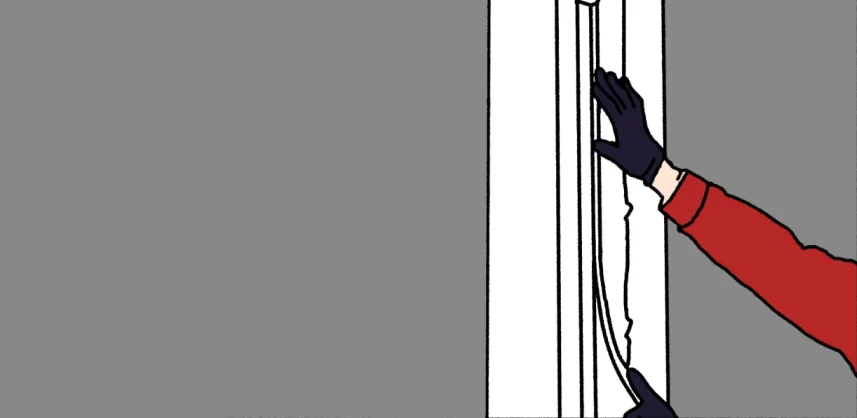
A box sash window has two sashes sliding in a frame. For them to slide at all there has to be clearance, and every clearance is a route for air. There are five of them.
- Between the lower sash and the staff bead — the inside bead that holds the lower sash in its channel. The gap runs the full height of both sides.
- Between the upper sash and the parting bead — the thin strip between the two sashes. Again, full height, both sides.
- At the meeting rail — where the top rail of the lower sash meets the bottom rail of the upper sash. On a worn window this is often the biggest gap of all, and the source of the rattle.
- Under the bottom rail — where the lower sash sits on the sill.
- Over the top rail — where the upper sash meets the head of the frame.
Add the pulley holes at the top of the box, through which air moves freely into the weight pockets and out into the room, and you have a window that can leak a surprising amount of air even when it looks closed. Historic England estimate that older buildings lose 15 to 20 per cent of their heat through draughts, and that of the roughly one-fifth of a home's heating that escapes through the windows, most goes through air gaps rather than through the glass itself. The glass is not the main problem. The gaps are.
Wipers and compression seals — the rule that decides everything
There are two kinds of seal, and using the wrong one is why so much draught-proofing fails.
A wiper seal is one that a surface slides past. A brush pile — a dense row of silicone-treated polypropylene filaments set in a plastic carrier — is the classic wiper. It presses lightly against the sash and lets it slide, and it copes with a gap that varies along its length, which every old sash does.
A compression seal is one that a surface closes onto. Foam and rubber profiles are compression seals; they need the two surfaces to press together and stay pressed.
The rule, in Historic England's words, is that wiper seals are the only way of sealing the sides and meeting rails of sliding sash windows. Compression seals belong where surfaces meet — under the bottom rail, at the head — and even there they are only worth fitting once the sash has been made to close properly. The Energy Saving Trust say the same thing more bluntly: for sliding sash windows, foam strips do not work well; fit brush strips or use a professional.
One point of detail, because it is so often wrong on other firms' websites: the Aquamac range that many sites describe as "brush pile" is not brush pile at all. It is a polyurethane foam compression seal. It has its uses, but not in a sliding channel.
What a proper draught-proofing job involves
The seals are the cheap part. What makes the job work is the overhaul that goes with them, and a specialist quote will always include it.
- Sashes out. The staff beads and parting beads are removed and both sashes lifted out of the box. This is the point at which the cords, pulleys and weights are inspected and, almost always, the cords replaced — it makes no sense to draught-proof a window and then have to take it apart again in two years for a snapped cord.
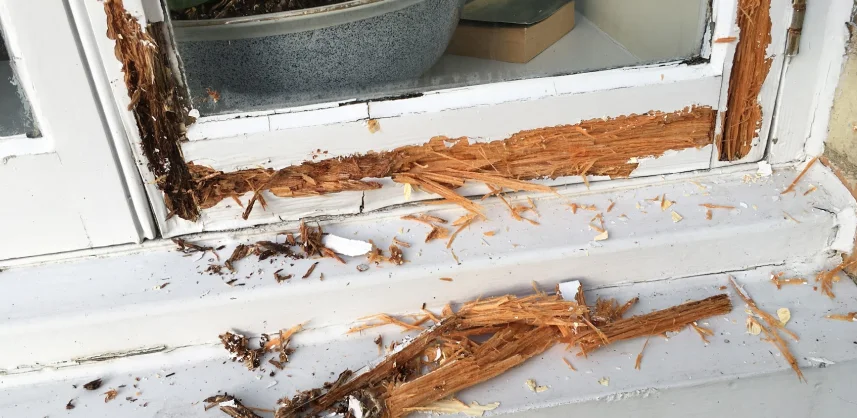
- Timber checked. Any decay at the sill, bottom rail or the foot of the stiles is dealt with now. Draught-proofing a window with a rotten bottom rail seals the draught and hides the rot.
- Sashes eased. Paint build-up on the edges of the sashes and in the channels is removed so the sashes run freely. On a window that has been painted shut this is most of the work.
- New beads, grooved for seals. New parting beads and staff beads are fitted, each with a groove routed along it carrying a brush-pile seal. The pile height is chosen for the actual gap on that window: roughly a 5.5 mm pile for a gap of 1.5 to 2.5 mm, 8.5 mm for 3 to 5.5 mm, 11.5 mm for anything up to 8.5 mm. One size does not fit all, and a firm that carries a single pile height is guessing.
- Meeting rail sealed. A groove is routed into the meeting rail of one sash and a brush-pile or fin seal fitted so the two rails close against each other. This is the seal that stops the rattle.
- Bottom and top rails. A compression seal — a slim EPDM profile or a brush — is fitted where the lower sash meets the sill and the upper sash meets the head.
- Pulley covers. Small brush plates or covers over the pulley slots close the last obvious route into the weight pockets.
- Re-corded, rebalanced, refitted. New cords, weights checked, sashes rehung, beads fixed, and the window run through its full travel to make sure the seals do not bind.
Two things follow from this. First, the job cannot be done properly with the sashes in the frame, so anyone offering a "stick-on" service is offering the DIY-shop method with a van. Second, the overhaul is worth having in its own right: Historic England's figures show that straightforward repairs alone — tightening joints, refitting the sashes, renewing the beads — cut air infiltration or heat loss by up to a third before any seal is fitted.
What it will not change
The seals are invisible when the window is closed and barely visible when it is open. The window still slides, still opens fully, still looks exactly as it did. Nothing is glued to the face of the timber; the seals live in grooves in the beads, which are new anyway. If a seal ever wears — and no manufacturer publishes a service life for brush pile, so treat any "lifetime" claim as marketing — it slides out of its groove and a new length slides in.
What you must not do is paint the flexible part of the seal. The beads are painted before the pile goes in, or the pile is masked.
What you will actually save
This is where honesty matters, because the figures on most websites are either wrong or misattributed.
Historic England's headline is that air infiltration through a sash window in good condition can be reduced by as much as 86 per cent by draught-proofing. Three things about that number. It is air infiltration, not heat loss and not money. It applies to a window in good condition — hence the overhaul. And it is a maximum, not an average. Their broader figure for windows generally is a 33 to 50 per cent reduction.
The Energy Saving Trust's published saving for draught-proofing is around £55 a year in Great Britain — but that is for draught-proofing the whole house, windows, doors and floors together, using generic strips. There is no published figure for sash windows on their own, and we will not invent one. What we can say is that a room with two sealed sash windows is noticeably warmer at the same thermostat setting, that the radiator under the window stops fighting a cold downdraught, and that the difference is most obvious on a windy night.
We also do not quote a payback period, because it depends on your heating, your tariff and how leaky the windows were to begin with. Anyone who gives you one to the year is guessing.
On noise: brush seals reduce the rattle to nothing and take the edge off traffic noise, because the same gaps that let air in let sound in. We do not quote decibel figures, because nobody has measured sash draught-proofing to a standard that would make one meaningful.
Ventilation — the one caveat
Old houses were designed to breathe, and a certain amount of air change is needed to keep condensation and mould at bay. Historic England recommend 0.4 to 0.8 air changes an hour for an older building in reasonable condition, and note that most exceed that comfortably, which is why draught-proofing is normally beneficial rather than harmful. The exceptions are rooms with open-flued combustion appliances — an open fire, an old gas fire, a boiler that draws air from the room — which need specialist advice before anything is sealed, and damp cellars and roof voids, which should be left alone.
If you already have, or are planning, secondary glazing, the original window should not also be draught-proofed. Sealing both traps moisture in the cavity between them and causes condensation on the inside of the outer glass. It is one or the other.
Regulations, in one paragraph
Draught-proofing an existing window is not "building work" under the Building Regulations. Part L is not triggered, because nothing is being replaced; there is no FENSA certificate to issue; and trickle vents are not required, since the rule attaching them applies to replacement windows. On a listed building, Historic England's position is that self-adhesive strips need no consent but that grooving the timber may — and grooving is the proper method. The workable test that some councils now publish is that no consent is needed provided the work is not visible from outside and does not harmfully weaken the window, which a routed bead does not. If in doubt, a short email to the conservation officer settles it. Like-for-like cord renewal needs no consent at all. In a conservation area there is nothing to apply for.
What it costs
Draught-proofing is priced per window and depends on what the overhaul turns up. Nationally, published prices for a full overhaul with re-cording and draught seals run from roughly £250 to £600 a window at the mainstream end and more at the specialist end; strip-only jobs with no overhaul are advertised from under £100 a frame, and are worth exactly what they cost. We quote after a survey and itemise the work on each window, so you can see what is seal and what is repair.
One thing to check on any quote: VAT. Draught stripping itself is zero-rated for VAT until the end of March 2027 (it is energy-saving material); the repairs, cords and decoration that go with it are standard-rated. A quote that shows a single VAT rate on the whole job is either over-charging you on the seals or under-charging on the rest.
Frequently asked questions
Will draught-proofing stop my sash windows rattling?
Yes. The rattle is the meeting rails knocking together and the sashes moving in their channels, and the seals at the meeting rail and in the beads hold them still. A window that has been overhauled and sealed does not rattle in any wind.
Can I draught-proof sash windows myself?
You can fit stick-on strip, but it will not work well on a sliding sash and will not last. Grooved brush-pile seals need the sashes out, the beads replaced and a router, and the job is far better done with the overhaul than without it. If you do go the DIY route, at least follow the Energy Saving Trust's advice and use brush strip, not foam.
Does draught-proofing need planning permission or building regulations approval?
No, in a conservation area or an ordinary house. On a listed building, seals set into grooves may technically need consent under some councils' interpretation; the usual test is that the work is invisible and does not weaken the window, which it does not. Ask the conservation officer if you want it in writing.
Is draught-proofing as good as double glazing?
No, and no honest firm will say it is. Double glazing improves the glass; draught-proofing closes the gaps. Since most of a sash window's heat loss is through gaps rather than glass, sealing them deals with the larger problem at a fraction of the cost, and it can be done on a listed building where double glazing usually cannot.
How long do the brush seals last?
No manufacturer publishes a service life for brush pile, so we will not either. In practice the seals outlast the paint, and because they sit in grooves in the beads, a worn length is replaced in minutes without disturbing the window.
Will I get condensation after draught-proofing?
Not normally, because an older house has more than enough background ventilation left. If a room already suffers from condensation, the cause is usually moisture from cooking, washing or drying clothes, and it needs ventilation rather than draughts. Rooms with open-flued appliances need advice before sealing.
Should I draught-proof windows that have secondary glazing?
No. Sealing both the original window and the secondary unit traps moist air in the cavity and causes condensation. Seal one or the other — and if you are choosing, draught-proof the original window and leave the secondary glazing off unless noise is the main problem.